
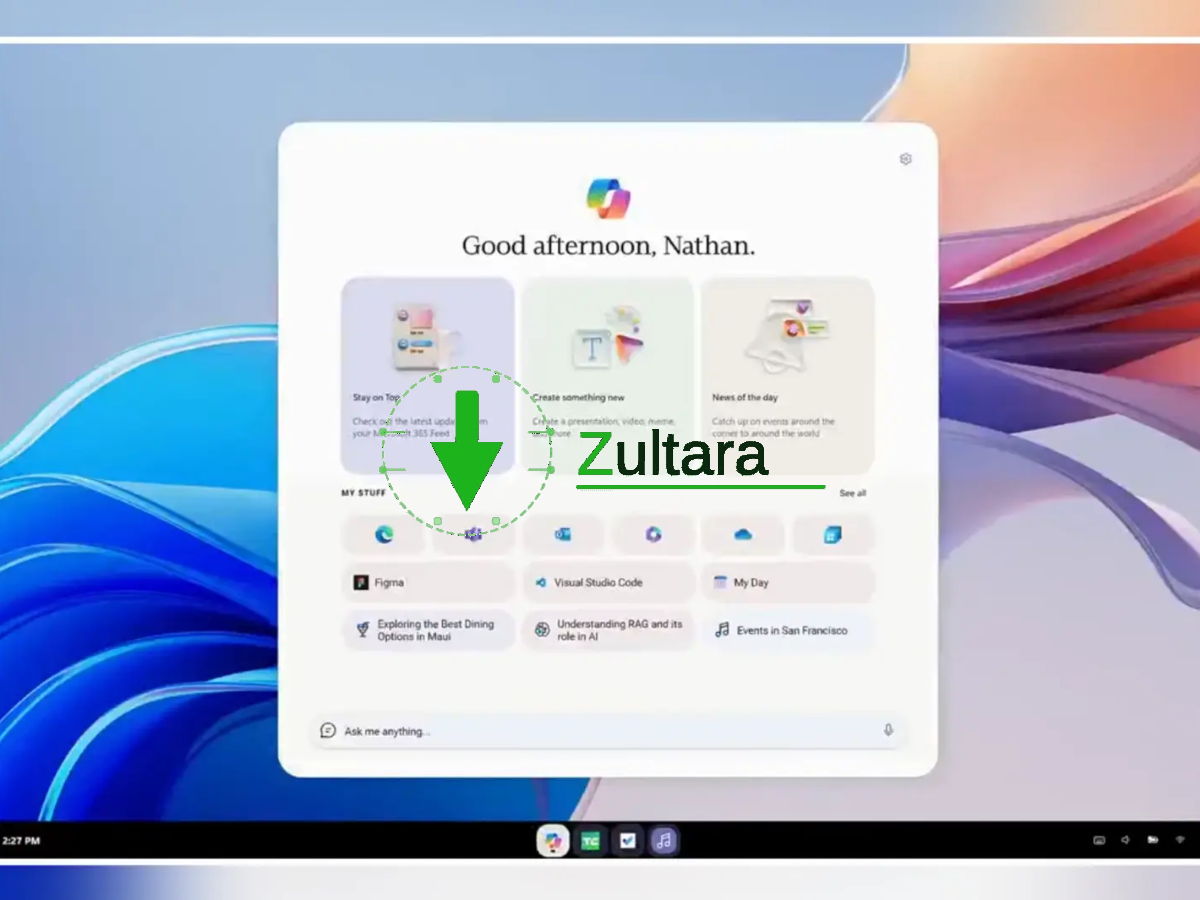
According to a leaked video reported by Windows Central, Microsoft has developed an internal prototype of a web-based operating system centered on CoPilot, where the AI assistant replaces the Start menu, taskbar, and traditional desktop shell.
The project, called Aion, was built on a codebase called “Win3” and used the Edge browser as its shell. The video first appeared on BetaWiki’s Discord server and is believed to be around two years old.
Sources confirmed the authenticity of the clip to Windows Central. Microsoft has not commented on whether Aeon was an internal hacking experiment or a product proposal, and the current status of the project is not known.
What the leaked Aeon video shows
The Aeon prototype features CoPilot as the primary interface to the operating system, replacing the traditional Windows overlay. Instead of the familiar Start menu and taskbar, a CoPilot-powered shell built with web technologies is used.
The leaked footage shows several notable features, including a multi-modal input box where users can type commands to interact with CoPilot. There’s also a placeholder for functions like the taskbar and Start menu.
A concept called “Spaces” groups apps and websites together with the help of AI, allowing users to open, close, or recall these Spaces through an interface similar to the Start menu.
Additionally, there are rich plugins that enable Copilot to perform tasks such as formatting and sending Outlook emails based on the content within Spaces.
The system is said to run on a lightweight, web-based Windows codebase, with the Edge browser and Chromium’s layout engine powering the Copilot experience.
Since the prototype is based on web technologies, it does not directly support native Win32 applications. When users want to open a Win32 program such as Microsoft Word, Aion provides a link to a Windows Cloud PC instance where the program can be used remotely.
This method follows what Microsoft has done with Windows 365 Cloud PC, where legacy applications run in a cloud-hosted Windows environment rather than directly on a local device.
Why is Microsoft’s Copilot OS prototype raising concerns?
Project Aeon is not a product that is currently available for shipping. The previously leaked footage is reported to be approximately two years old, and Microsoft has not confirmed whether the project is still actively in development, has been reworked into other initiatives, or whether it has been discontinued.
Windows Central’s sources describe Aeon as an internal experiment, but there is no official information about its future plans.
Recently, Microsoft reduced some CoPilot integration in Windows 11 after user feedback about feature bloat. Plans to include Copilot in Notifications and Settings were quietly canceled, and Microsoft Edge recently removed its AI-powered history search feature after user outcry.
These decisions suggest that Microsoft is taking a more cautious approach to adding Copilot capabilities to Aion than originally proposed.
Meanwhile, Copilot continues to expand through what Microsoft calls multiple agentic “personalities,” and Edge is already gaining agentic browsing features. This pattern indicates that, even if Aion itself is not released, some of its design elements are still visible in Microsoft’s products.
Public reaction to the leaked clip has been largely negative. Reddit users on r/PCMasterRace expressed concerns about the CoPilot-powered operating system, highlighting issues such as the potential loss of support for native applications without cloud dependencies, privacy concerns related to AI that can read all spaces, and less user control than traditional Windows desktops.
Users also noted that core OS functions would require Internet access. Microsoft’s terms of use for CoPilot specify that users adopt the assistant at their own risk, which has increased skepticism about the CoPilot-centric approach to operating system design.
What Project Aeon means for Windows users
For current users of Windows 10 and Windows 11, Aion has no immediate impact. The prototype is not publicly available, and Microsoft has not announced plans to replace the standard Windows shell with a CoPilot-based interface.
There are several steps users concerned about AI integration into Windows can take. They can review Windows settings under Privacy and Security to control what data is accessible to Copilot and other AI features.
If the Assistant is not needed, it can be disabled on Windows 11 via Settings, Personalization, Taskbar. It is also advisable to keep an eye on Insider builds for updates on how Copilot is integrated into the shell.
Additionally, reviewing Microsoft’s Copilot terms of use can help users understand its data management policies. For those who prefer traditional Windows workflows, it’s worth noting that Microsoft has continued to add options that address feedback about CoPilot placement.
Recent updates include the option to pause Windows Updates indefinitely, a movable taskbar, and a dedicated taskbar size setting available in Insider builds.
Aeon is part of Microsoft’s broader effort to develop agentic AI within the operating system. The Windows Central report compared Aeon to other Microsoft projects that include agentic technology, such as the expansion of automation features in Edge and the more than 80 Copilot products in Microsoft’s portfolio.
It is unclear whether Aeon will be released publicly or remain an internal project. The leaked footage shows just how far Microsoft was willing to go in redesigning the Windows shell to incorporate AI.
Those interested in the future of Windows may see changes at the shell level in upcoming Insider builds and official roadmap updates, which may indicate whether any of Aeon’s concepts are being followed through.
Microsoft has not officially acknowledged the Aion project. No release date, revival plans, or public roadmap has been provided.


